
Therapeutic Plasma Exchange
A physician-supervised medical procedure that separates and replaces plasma to support various clinical needs.
What Is Plasma Exchange?
Therapeutic plasma exchange (TPE), also called plasmapheresis, is a medical procedure in which your blood is drawn, separated into its components, and the plasma portion is removed and replaced with a clean substitution fluid — typically human albumin.
Plasma is the liquid part of your blood that carries proteins, antibodies, and other substances. In certain conditions, plasma may contain components that contribute to disease processes. By exchanging it, physicians aim to remove these substances while maintaining blood volume and function.
TPE is a well-established procedure used in hospital and outpatient settings worldwide. At Plasma Life Center, it is performed in-clinic using medical-grade apheresis equipment under direct physician oversight.
How the Procedure Works
Vascular Access
An IV line is placed to draw blood. Depending on the protocol, this may be a peripheral IV or a temporary central line.
Separation
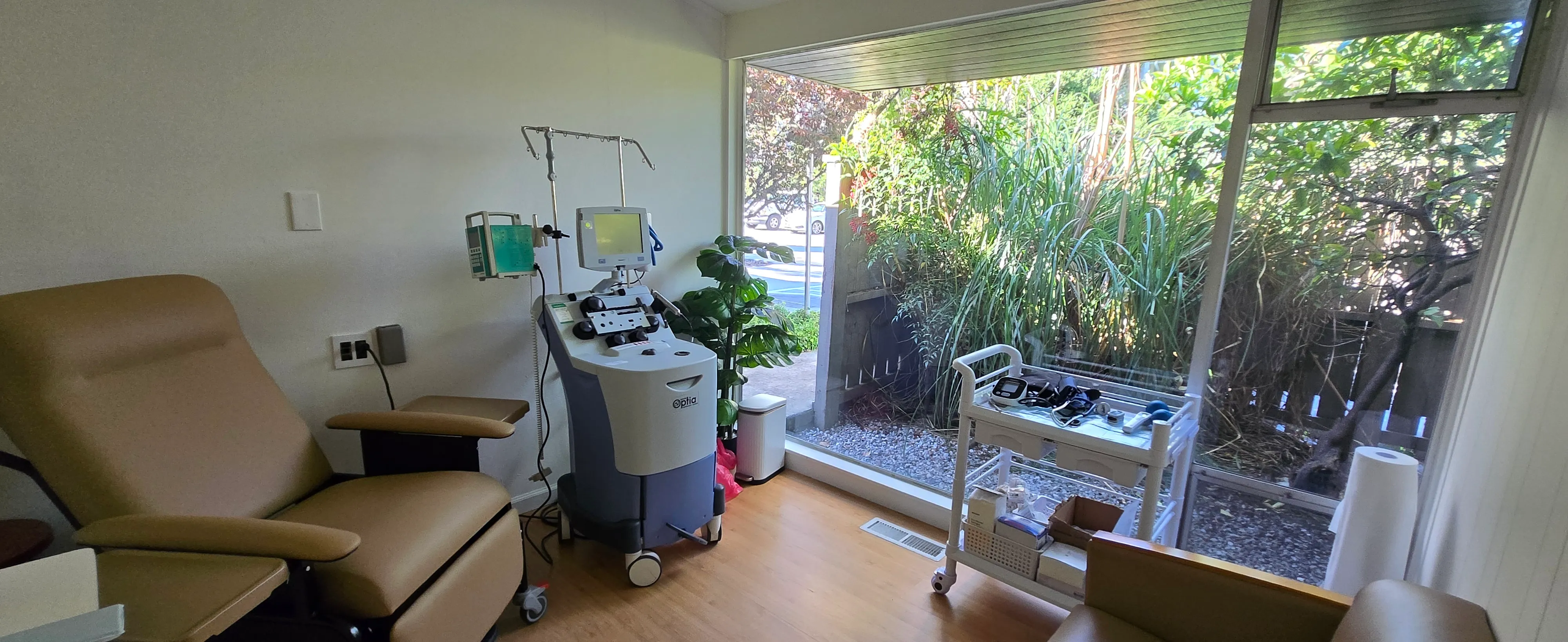
Blood passes through the Spectra Optia apheresis machine, which separates plasma from blood cells using centrifugation.
Plasma Replacement
Separated plasma is discarded and replaced with albumin solution. Blood cells are returned to your body.
Monitoring
Vital signs are monitored throughout. The procedure typically takes 1.5 to 3 hours per session.
Post-Procedure
Most patients can resume normal activities the same day. Your physician will provide specific aftercare instructions.
What to Expect During Your Visit
Before Treatment
- Initial consultation to review your health history and goals
- Lab work to assess baseline values and confirm candidacy
- Discussion of risks, benefits, alternatives, and expected outcomes
- Protocol planning tailored to your individual needs
During Treatment
- Comfortable clinical setting with trained staff present
- Continuous monitoring of vital signs and machine parameters
- Most patients read, work, or rest during the procedure
- Immediate access to physician if any concerns arise
After Treatment
- Brief observation period before discharge
- Same-day return to normal activities for most patients
- Follow-up appointments as determined by your protocol
- Clear instructions for any temporary precautions
Safety and Candidacy
TPE is generally well-tolerated, but like all medical procedures, it carries risks. Common considerations include:
Your physician will discuss all risks specific to your health profile during the consultation. Not every patient is a candidate for TPE — candidacy depends on your medical history, current health status, and treatment goals.
Education vs. Recommendation
The information on this page is educational. It describes the general TPE procedure and is not a substitute for individualized medical advice. Whether TPE is appropriate for you can only be determined through a physician consultation that considers your specific situation.
We encourage you to bring questions to your consultation. Our physician will explain what TPE can and cannot do for your particular circumstances.
Learn about specific conditions where TPE may be discussed:
Explore ConditionsHave Questions About TPE?
Request a consultation to discuss whether therapeutic plasma exchange may be appropriate for your health goals.
Request a ConsultationOr call (650) 289-8038