
The Science Behind TPE: Reversing the Biomarkers of Aging
Standard blood tests flag damage after it has happened. A landmark 2026 analysis of 20,405 people identifies IgG glycans as a modifiable marker of biological aging and inflammaging — and finds therapeutic plasma exchange among the most direct ways to shift them toward a younger profile.
Standard clinical blood tests — like blood glucose, cholesterol, or CRP — only alert us after significant damage or acute inflammation has already occurred. By contrast, longevity medicine focuses on detecting and reversing biological decline years before disease takes hold.
A landmark April 2026 study published on medRxiv by an international team led by Prof. Gordan Lauc evaluated nearly 20 years of data across 20,405 individuals [1]. Their findings confirm that Immunoglobulin G (IgG) glycans are among the most accurate, modifiable markers of biological aging and systemic inflammation (inflammaging) available today.
Why IgG Glycans Matter: Effectors, Not Bystanders
Unlike passive genetic clocks, the glycans attached to your IgG antibodies actively dictate immune behavior:
- Pro-inflammatory glycans drive systemic tissue damage and accelerate biological aging.
- Anti-inflammatory glycans promote tissue repair and resolve inflammation.
Across 19 chronic conditions — including cardiovascular disease, type 2 diabetes, and autoimmune disorders — researchers identified a shared “glycan signature.” As we age or develop chronic disease, our glycome shifts toward a pro-inflammatory state. In fact, a higher GlycanAge directly correlates with increased mortality risk, independent of traditional clinical markers like cholesterol, blood pressure, or CRP [1].
TPE: A Direct Route to Immune Rejuvenation
Crucially, the IgG glycome isn’t static — it responds dynamically when you address the underlying drivers of inflammation.
The study evaluated key interventions capable of shifting the glycome toward a younger, healthier profile. Therapeutic Plasma Exchange (TPE) emerged as one of the most direct and effective tools [1]:
- Quantifiable Reversal: Participants undergoing monthly TPE saw their GlycanAge decrease by an average of 0.4 glycan years per month.
- Systemic Clearance: By physically filtering out circulating pro-inflammatory factors and replacing them with clean plasma constituents, TPE helps reset the systemic environment and rejuvenates antibody function.
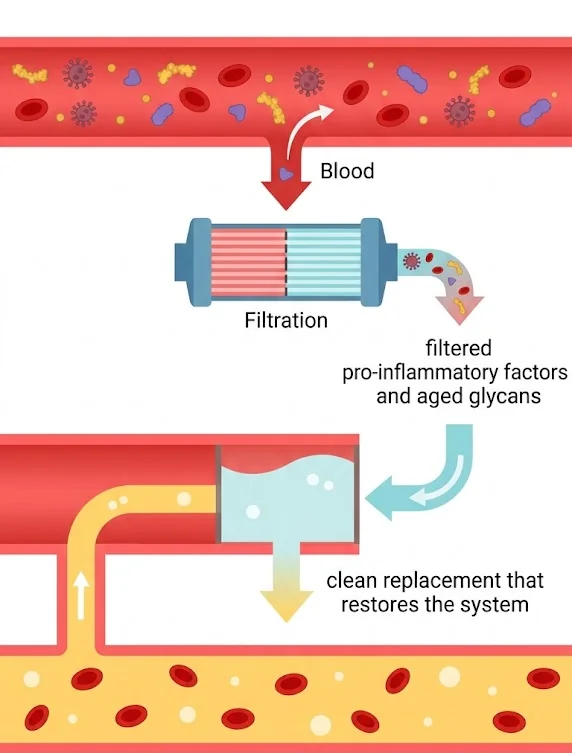
How TPE works: blood is drawn, the plasma carrying pro-inflammatory factors and aged glycans is filtered out, and a clean replacement fluid is returned to circulation with the patient’s own blood cells.
Proactive Health Management
Biological aging isn’t fixed. By pairing TPE with advanced biomarker tracking like GlycanAge, you can measure the real-time impact of your longevity protocols — giving you a clear, actionable feedback loop for long-term healthspan extension.
For a closer look at the same analysis and how it fits alongside the 2025 randomized trial of TPE and epigenetic aging clocks, see our article on the GlycanAge study’s headline finding and our review of the TPE longevity evidence. To discuss whether a physician-supervised TPE program is appropriate for you, explore our Aging & Longevity page or request a consultation.
References
- Lauc G, et al. The Immunoglobulin G Glycome: A Modifiable Biomarker and Functional Effector of Aging, Disease, and Mortality. medRxiv preprint. 2026. doi:10.64898/2026.04.21.26351390. https://www.medrxiv.org/content/10.64898/2026.04.21.26351390v1
Have Questions About This Topic?
Request a consultation to discuss whether TPE may be appropriate for your situation.
Request a ConsultationOr call (650) 289-8038